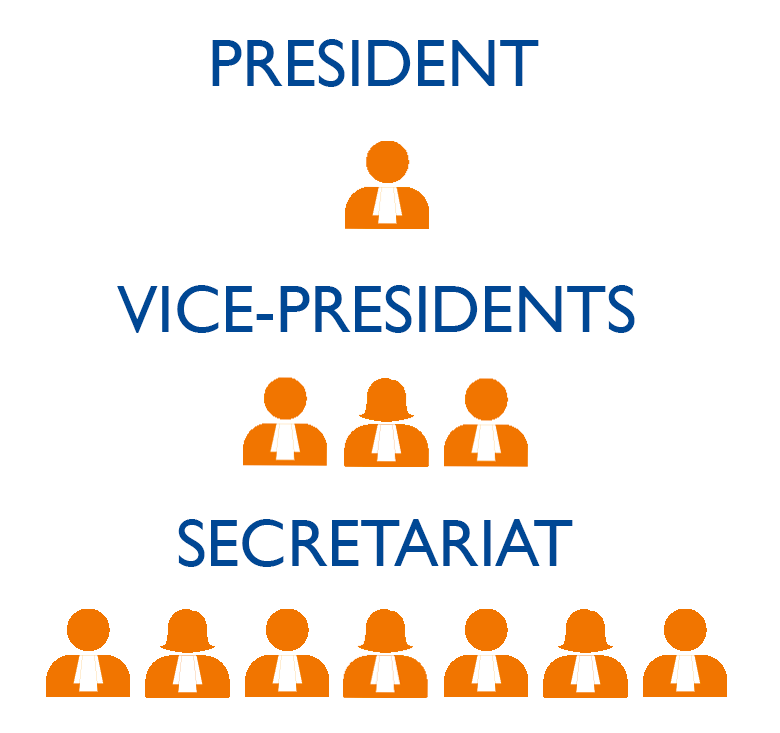
A president and three vice presidents are elected for one-year terms (See the Presidency webpage). There is a secretary general, who manages the day-to-day affairs of the organisation through a secretariat of 15 full-time staff, based in Brussels (See the Secretariat webpage).
Members
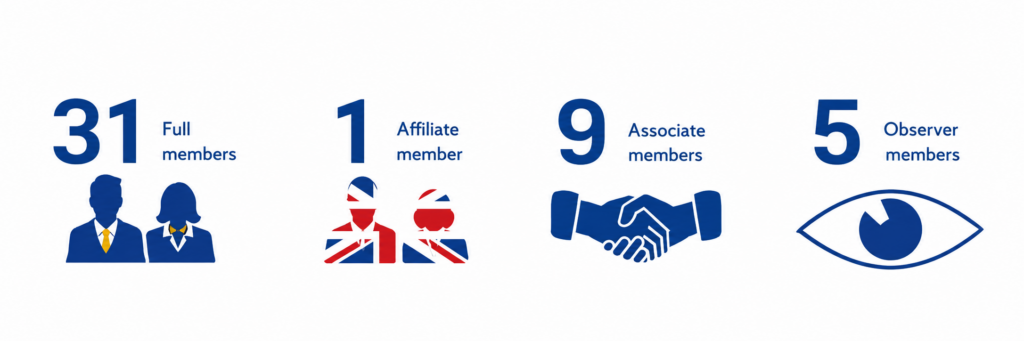
The national bars and law societies of the 27 members of the European Union, the 3 members of the European Economic Area (Norway, Liechtenstein, and Iceland) as well as Switzerland, are full members of the CCBE. Following the withdrawal of the United Kingdom from the European Union, a new form of affiliate membership has been created, which allows the UK delegation to remain a CCBE member, with certain restrictions, in particular on matters relating to EU policies.
In addition, Bars and Law Societies from Council of Europe countries in official negotiations for accession to the European Union are associate members, and those from other Council of Europe countries are observer members.
All CCBE members must adhere to the statutes of the CCBE and adopt the CCBE Code of Conduct.
Specialist committees and working groups made up of nominees and experts from the national delegations research and report on a wide range of areas affecting the European legal profession. Topics include lawyers’ ethics, competition as it affects the legal profession, the free movement of lawyers, training of lawyers, international trade in legal services, and human rights. In recent years, working groups have focused on such subjects as money laundering, legal aid, divorce, European contract law, alternate dispute resolution and corporate social responsibility.